



Integrating Gender into Public Health Programmes
A Program science Approach
Gender is a decisive determinant of health, shaping risks, access, and outcomes. Gender inequalities influence every stage of public health programming, yet they often remain unaddressed.
This Gender Integration primer is designed for the Institute for Global Public Health (IGPH), University of Manitoba (UoM), gender leads and gender champions involved in the design, implementation, and monitoring of public health programmes. It provides guidance on systematically integrating gender equality considerations using a program science approach, helping teams translate intent into action.
The primer can be applied across programme planning, implementation, and monitoring, and should be adapted when used with different audiences.
what is
program science
Program science is the systematic use of scientific knowledge to improve how public health programmes are designed, implemented, and evaluated. It links research, programmes, and policies such that research topics emerge from real-world programme and policy needs. The evidence generated is used to strengthen programmes and policies.
Why
Gender Integration
Matters
Integrating gender ensures public health programmes address the barriers, needs, and power dynamics that drive health inequities.
Gender shapes health risks and access
Gender shapes who is able to seek care and who is left out. Women, men and gender-diverse people face distinct barriers such as mobility limits, stigma and restrictive norms. These directly influence their ability to access and use services.
Gender inequality worsens health inequities
Harmful norms, limited decision-making power, violence and discrimination deepen barriers for women, girls and gender-diverse people. They contribute to poorer health outcomes and limit access to safe, respectful care.
Gender-responsive programmes are more effective
Programmes that address gender norms, safety, and agency show higher uptake, better retention, and improved outcomes. Engaging women, men, and gender-diverse individuals as peer educators or community workers strengthens trust and relevance.
Gender analysis improves accountability & responsiveness
Disaggregated data reveals who is excluded and why, enabling targeted strategies. It identifies unintended effects, such as backlash or increased burdens on frontline workers, prompting timely course corrections.
Gender integration aligns with global commitments
Sustainable Development Goals 3 and 5, along with WHO and UNAIDS guidance, require integrating gender and equity into planning, monitoring, and implementation to ensure no one is left behind.

PREPARING FOR GENDER INTEGRATION
Effective gender integration requires deliberate preparation within organisations and programmes. Three foundational steps help create the conditions for success.


PREPARING FOR GENDER INTEGRATION
Effective gender integration requires deliberate preparation within organisations and programmes. Three foundational steps help create the conditions for success.

Integrate gender into organisational policies
Gender-inclusive policies provide a formal foundation for action and institutionalises commitments. Clear policy frameworks guide programme design, implementation and evaluation through a gender lens.

Identify and support gender champions
Selecting committed staff as gender champions drives integration, promotes gender-sensitive practices and supports peer learning. A network of champions strengthens internal support for the initiative and sustains momentum for change.

Engage leadership through sustained advocacy
Building leadership understanding and commitment requires regular engagement, targeted orientations or training and ongoing strategic communication to ensure long-term institutional support.
Integrate gender into organisational policies
Gender-inclusive policies provide a formal foundation for action and institutionalises commitments. Clear policy frameworks guide programme design, implementation and evaluation through a gender lens.
Identify and support gender champions
Selecting committed staff as gender champions drives integration, promotes gender-sensitive practices and supports peer learning. A network of champions strengthens internal support for the initiative and sustains momentum for change.
Engage leadership through sustained advocacy
Building leadership understanding and commitment requires regular engagement, targeted orientations or training and ongoing strategic communication to ensure long-term institutional support.
Resources to support integration

APPLYING PROGRAM SCIENCE TO GENDER INTEGRATION
Program science is organised around three interconnected spheres that guide how evidence is applied across the programme cycle.


APPLYING PROGRAM SCIENCE TO GENDER INTEGRATION
Program science is organised around three interconnected spheres that guide how evidence is applied across the programme cycle.

Strategic Planning and Resource Allocation
Uses evidence to identify priority populations and geographies, programme packages and platforms, and define programme goals.

Programme Implementation
Applies real-time learning to adapt interventions, respond to local contexts, and deliver services in ways that reflect differentiated community needs and priorities .

Programme Management and Monitoring
Uses routine data, performance reviews, and learning processes to guide decisions, improve accountability, and refine programmes throughout the cycle.
Strategic Planning and Resource Allocation
Uses evidence to identify priority populations and geographies, programme packages and platforms, and define programme goals.
Programme Implementation
Applies real-time learning to adapt interventions, respond to local contexts, and deliver services in ways that reflect differentiated community needs and priorities .
Programme Management and Monitoring
Uses routine data, performance reviews, and learning processes to guide decisions, improve accountability, and refine programmes throughout the cycle.
Key Concepts & Action Steps
Strategic Planning &
Resource Allocation
Integrating gender into strategic planning ensures that research, programmes, policies and resource allocation address gender-related health inequalities from the outset. Early integration helps set clearer equity goals, direct resources effectively and reach people who are otherwise excluded from services.
Key Concepts
- Strategic planning begins by characterising and understanding local epidemiological context to identify priority geographies and population groups.
- Using techniques like population size estimation, rapid ethnographic assessments, bio-behavioural surveys, and mathematical modelling reveals how gender affects risks, service access, and outcomes.
- Setting gender-responsive goals and allocating resources ensures strategic information is used to design and deliver gender-responsive programmes.
- Planning benefits from including the perspectives of groups most affected by gender inequalities so decisions reflect their realities and needs.
STEP
01
Analyse sex and age data to identify gaps
Review sex, gender identity and age data to understand who is being left out and where gender-specific gaps exist. Use these patterns to identify priority populations and locations for focused attention.
In Practice
Using sex-disaggregated data for prioritisation
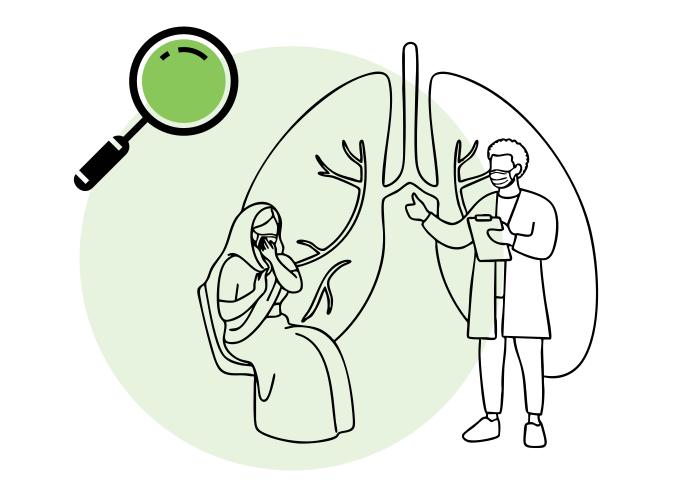
Sex-disaggregated TB data in Country X showed that notification among men aged 25 to 45 years was 1.8 times higher than among women in the same age group.
Women were more likely to complete treatment, while men experienced considerably higher loss to follow-up. These differences highlighted gaps in both detection and continuity of care. The programme used these insights to prioritise targeted actions, including strategies to improve early detection among women and tailored adherence support to reduce drop-out among men. The findings strengthened the programme’s ability to align interventions with the needs of men and women.
STEP
02
Conduct a gender analysis
Examine how roles, responsibilities, norms, and decision making shape people’s risks and access to services. Look at barriers faced by different groups at home, in the community, and in health facilities.
In Practice
Gender analysis of HIV risk among adolescent girls and young women
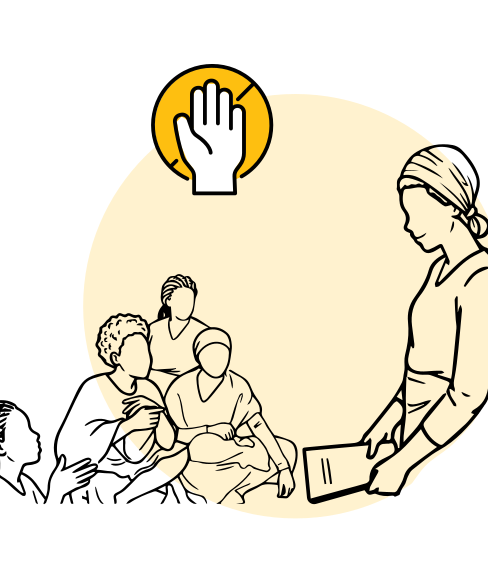
In Country Y, a gender analysis for an HIV prevention programme for adolescent girls and young women revealed multiple intersecting vulnerabilities. Girls carried unpaid household and caregiving work, limiting time and mobility to attend services.
Harmful norms normalised relationships with older male partners and discouraged condom negotiation, increasing HIV risk. Many had limited autonomy in sexual and reproductive decisions and restricted access to education, phones and transport. Economic dependence on male partners pushed some into transactional relationships with little bargaining power. These findings guided targeted strategies to reduce gender-specific risks and improve access to services for girls and women.
STEP
03
Define gender-responsive goals and outcomes
Use insights from the data and gender analysis to set clear goals, objectives, and outcomes that address identified barriers. Ensure these commitments focus on improving access, autonomy, and equity for marginalised groups.
In Practice
Setting gender-responsive goals and outcomes for maternal health
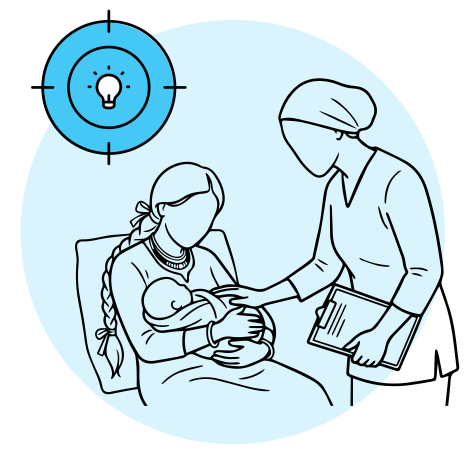
A maternal and child health programme in Country Z used gender analysis to define gender-responsive goals, objectives and outcomes. The goal focused on equitable access to quality maternal and reproductive health services for marginalised women and adolescent girls. The programme aimed to increase skilled birth attendance and antenatal care by addressing mobility limits, partner opposition, financial dependence and caregiving demands. It set outcomes to strengthen decision-making power for young mothers and reduce barriers such as stigma and lack of transport. All monitoring data were disaggregated by age and marital status to track progress across sub-groups.
STEP
04
Allocate resources for gender integration
Plan budgets, staff time, and tools for gender-responsive activities such as training, community engagement, and monitoring. Include dedicated funding lines to ensure these actions remain a priority throughout the programme.
In Practice
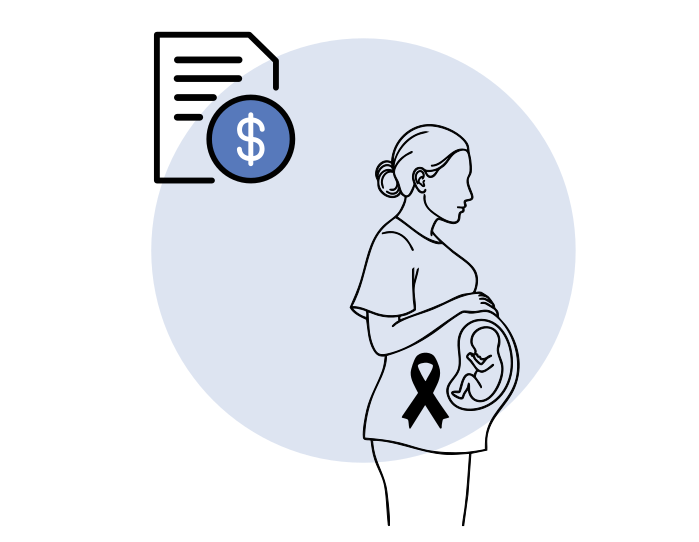
Gender-responsive budgeting for improved service access
An HIV programme in Country A used gender analysis to guide gender-responsive budgeting for preventing vertical transmission. The analysis showed that women and young women in remote communities faced mobility and cost barriers that limited access to antenatal and HIV services. The programme allocated funds for mobile outreach clinics and created friendly spaces within existing facilities. It budgeted for training health workers in gender-sensitive counselling, and identification and referral of gender-based violence survivors. Transport vouchers and conditional cash transfers supported pregnant women from low-income households. Additional funds strengthened sex- and age-disaggregated data systems to track reductions in gender disparities.
STEP
05
Ensure meaningful participation
Involve women, men, and gender-diverse groups early in planning and decision making. Create structured opportunities for marginalised groups to validate priorities and inform programme choices.

In Practice
Meaningful community engagement
A national HIV prevention programme in Country B involved diverse key population groups throughout its lifecycle. Consultation workshops included sex worker networks, young women who sell sex, transgender activists, people who use drugs, and men who have sex with men (MSM), including those with online partners.
Community Advisory Boards at clinic and district levels advised on clinic hours, service packages, stigma reduction and outreach. Transgender community members helped design gender-affirming services, including hormone therapy and training for respectful care. Feedback resulted in programme adaptations such as extended hours for working MSM and stronger privacy measures for young women who sell sex.
TIPS FROM THE FIELD
- Break down your data by age, sex, gender identity and relevant sub-population groups so that inequalities become visible.
- Refresh your gender analysis periodically since community realities and norms can shift over time.
- Plan for participatory discussions with affected groups so that priorities reflect their lived experiences.
- Review planning data with programme teams and community representatives to check whether proposed actions match what the evidence shows
- Keep a simple record of planning decisions so that resource allocation remains transparent and aligned with gender-related needs.
Self-check
HOW WELL IS GENDER INTEGRATED INTO YOUR PLANNING?
Use this quick reflection tool to see where your programme stands.
Select Red, Amber, or Green (RAG) for each item based on your current practice.
What the colours mean
Red means this is not in place or rarely done.
Amber means this is partly in place or inconsistent.
Green means this is strong and consistently applied.
After completing all items, identify one practical change that would help move your Reds or Ambers towards Green.
Use of disaggregated data
We analyse sex, gender identity and age data and use it to identify priority groups and locations.
Resources for gender integration
Our plans and budgets include time, funding, and tools for gender-responsive work.
Gender analysis
We examine norms, roles, decision making, and resource access and utilisation across different groups.
Participation in planning
Women, men, and gender-diverse people are meaningfully involved in planning and validation.
Clear gender-responsive goals & outcomes
We have explicit goals and outcomes that address identified gender-based barriers.
Use of multiple evidence sources
We use routine data, qualitative insights, surveys, modelling, and community feedback to guide planning.
Key Concepts & Action Steps
PROGRAMME
IMPLEMENTATION
Public health programmes integrate gender responsive strategies effectively when programme components, service delivery platforms and community engagement respond to the different realities and constraints faced by all genders.
Doing this strengthens coverage, quality, and equity in programme delivery. It requires putting core gender-equality principles into practice across all aspects of implementation. These principles include non-discrimination, equal access, meaningful participation, gender power analysis, and the “do no harm” approach.
Key Concepts
- Gender-responsive implementation requires choosing programme components and delivery platforms suited to the local context, including social conditions and operational requirements.
- Strong implementation depends on engaging affected communities, peer networks and groups who experience gender-based barriers, whose insights shape locally relevant programme responses.
- Programmes should refine components and strategies using ongoing learning from embedded research, routine monitoring, and community feedback.
- Implementation must consider norms, stigma and structural barriers that limit service use, and address them to improve participation and continuity.
STEP
01
Tailor service delivery to gendered needs
Adapt service hours, locations and delivery modes to reflect gendered needs. This includes women’s caregiving demands or mobility needs, men’s need for discreet or workplace-based services, and safe spaces for transgender and non-binary people.
In Practice
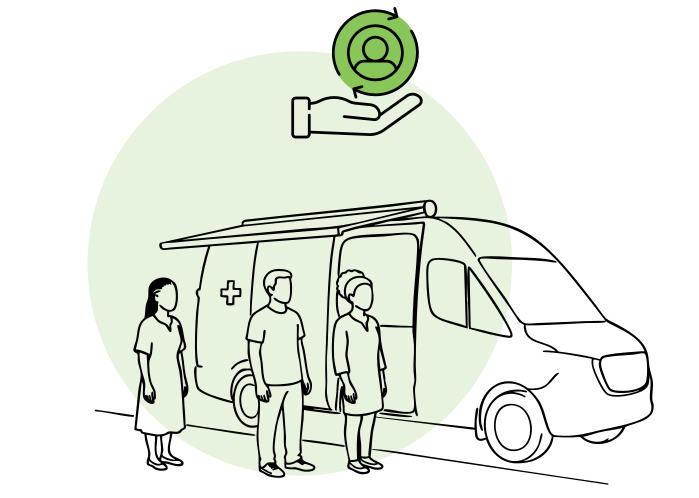
Gender-responsive adaptations in service delivery
In Country X, HIV prevention teams used mobile clinics and moonlight clinics that operated at night in confidential locations to reach female sex workers who avoided daytime clinics. In Country Y, the MNCH programme brought antenatal and child-health services closer to pregnant women and mothers through community platforms such as Village Health and Nutrition Days. These approaches helped align services with gendered patterns of mobility, safety concerns and caregiving responsibilities. In other settings where services are delivered through government systems, tailoring care may require understanding service guidelines, advocating with decision makers and identifying resources to adjust hours, locations or delivery modes.
STEP
02
Strengthen gender-sensitive provider practices
Build health workers’ capacity to deliver inclusive care and reduce bias. Develop their skills in identifying gender-based violence, making referrals, and offering gender-affirming support for transgender and non-binary people.
In Practice
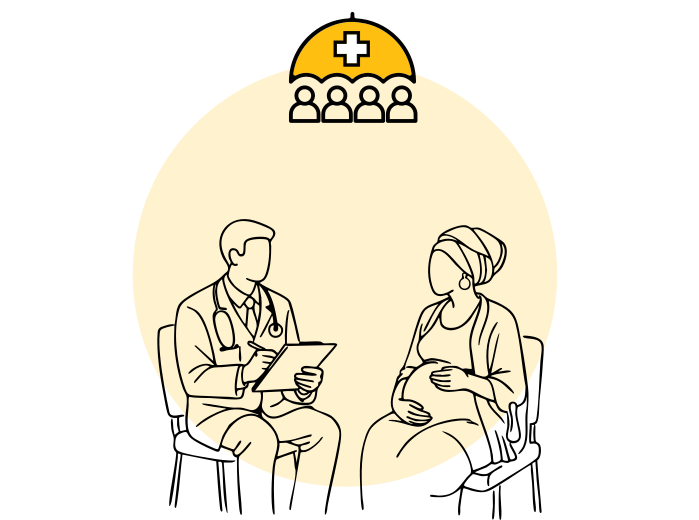
Building respectful maternity care
In Country A, health workers in public-sector labour rooms received training and mentoring to provide respectful and gender-responsive maternity care. The approach supported providers to recognise women’s preferences, ensure dignity during labour, and reduce bias in clinical interactions. Teams also engaged male partners and family members, where appropriate, to support women’s choices, improve birth experiences and promote shared responsibility for maternal and newborn care. These efforts helped shift provider behaviour, strengthen respectful care practices and create labour-room environments where women experienced greater comfort, safety and decision-making power during childbirth.
STEP
03
Create safe and dignified facility environments
Ensure facilities uphold privacy, confidentiality and respectful treatment, and remain free from discrimination, stigma or violence. Put systems in place to report concerns and address breaches of respectful care.

In Practice
Creating safer facilities for all
In Country Y, facility teams built their capacity to design and implement gender equality action plans that promoted respectful and non-discriminatory care. Teams improved basic infrastructure by providing clean, separate toilets for all genders and displaying visual cues that reinforced equity and respectful treatment. They set up confidential ways for care seekers to report abuse or mistreatment and introduced feedback systems to raise concerns and resolve violations. These measures helped address gender-based barriers to care within the health care facilities.
STEP
04
Integrate gender-responsive activities across levels
Design interventions that address gender-based barriers at individual, household, community and facility levels. Focus on improving access, agency and participation for those most affected by inequality. Use participatory approaches that build confidence and decision-making power.
In Practice
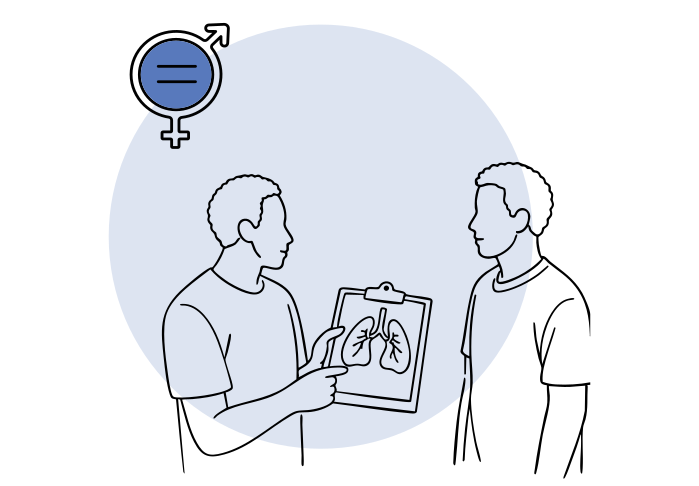
Addressing gender across the system
Country Z engaged male champions in TB programmes to reduce stigma and encourage men to seek care and complete treatment. These champions helped normalise conversations about symptoms, testing and treatment, and supported men who hesitated to visit facilities due to fear or shame. In Country A, HIV prevention programmes for sex workers strengthened collectives so women could organise, share information and support one another. Sex workers gained knowledge of their rights to prevent and respond to violence. Collectivisation created safer spaces for reporting incidents, improving access to services and strengthening community-led protection efforts.
STEP
05
Engage women, men and gender-diverse people as partners
Work with community health workers, peer educators and volunteers from diverse gender groups. Collaborate with women’s groups, key population organisations and men’s networks to strengthen trust, reach and relevance of services.
In Practice
Working through community networks
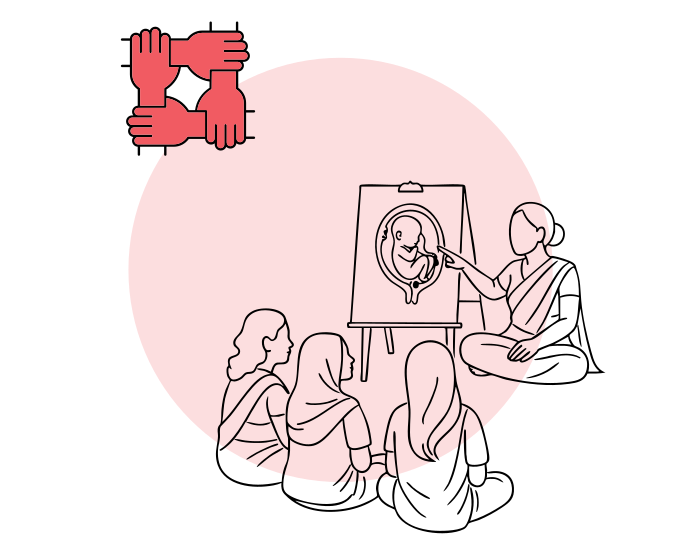
In Country C, the government partnered with women’s self-help groups (SHG) to deliver RMNCH education in rural areas. SHG members shared information on maternal health, newborn care and contraception, reaching women who rarely visited facilities. In Country Z, implementing partners worked with key population–led community-based organisations to strengthen peer-led outreach. Members of key populations served as peer educators, providing health information, distributing commodities and supporting access to services tailored to their communities. These approaches built trust, extended programme reach and ensured health messages and services were delivered by people who understood the lived realities of those they served.
STEP
06
Address structural and social barriers
Work with communities to challenge harmful norms like early marriage and limits on women’s mobility. Strengthen links with shelters, legal and economic support. Collaborate with families, leaders and other sectors to address health-related inequalities.

In Practice
Linking health and social protection
In Country X, HIV prevention efforts integrated oral PrEP delivery with social protection schemes for adolescent girls. Programme teams recognised that many girls faced economic barriers that limited their ability to start or continue PrEP, including school-related costs, limited financial support and pressure to prioritise household responsibilities. Cash transfers and educational support were provided alongside PrEP services to reduce these constraints and help girls remain engaged in prevention. Integrating HIV services with social protection addressed immediate and underlying risks, enabling adolescent girls to make safer, more informed decisions about their health.
STEP
07
Use gender-inclusive communication and materials
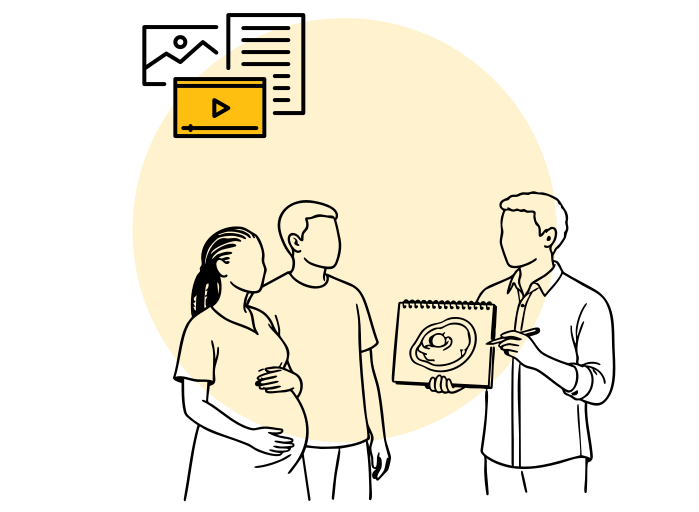
Apply gender-sensitive language, images and narratives in Information, Education, and Communication materials to promote respect for all gender identities. Ensure behaviour-change communication addresses gendered beliefs, power relations and stigma that shape health behaviours and access to services.
In Practice
Engaging men in care
In Country Z, programme teams developed targeted messages encouraging men to take an active role in maternal health. These messages highlighted practical ways men could support antenatal visits, birth preparedness and postnatal care. They directly challenged harmful social and gender norms, including the belief that intimate partner violence is a private family matter and should not be discussed outside the home. By addressing these norms, the communication efforts supported broader work to prevent gender-based violence and promote safer household environments. Delivering these messages through trusted community channels helped increase men’s engagement.
TIPS FROM THE FIELD
- Match the programme package and delivery platforms to address people’s routines, needs, priorities and safety concerns.
- Work with champions, peers, outreach workers, health workers, and community collectives to extend reach and improve acceptance of services.
- Provide mentoring and practical coaching to help front line workers to apply gender-sensitive practices consistently.
- Use simple feedback systems and mechanisms so affected communities safely raise concerns about disrespect or mistreatment.
- Coordinate with legal, economic and social support systems to address barriers beyond the health facility.
- Design communication that challenges harmful norms and shows concrete actions people can take to support care.
Self-check
HOW WELL IS GENDER INTEGRATED INTO YOUR IMPLEMENTATION?
Use this quick reflection tool to see where your programme stands.
Select Red, Amber, or Green (RAG) for each item based on your current practice.
What the colours mean
Red means this is not in place or rarely done.
Amber means this is partly in place or inconsistent.
Green means this is strong and consistently applied.
After completing all items, identify one practical change that would help move your Reds or Ambers towards Green.
Gender-responsive service delivery
We adapt service hours and delivery platforms to reflect gendered mobility, safety and caregiving needs.
Provider practices
Our health workers use gender-sensitive, bias-free practices and can identify and refer people who experience violence.
Facility environment
Our facilities ensure privacy, confidentiality and respectful treatment, with trusted ways to report concerns.
Multi-level action
We address gender-based barriers across individual, household, community and facility levels.
Community and peer engagement
We work with peers, community groups and gender-diverse networks to extend reach and trust.
Communication and materials
Our messages use gender-sensitive language and address norms, stigma and power dynamics.
Key Concepts & Action Steps
PROGRAMME MANAGEMENT
& MONITORING
Integrating gender into programme management and monitoring means embedding gender across data systems, decision making structures, performance management and learning processes.
This ensures that gender-related inequalities are systematically tracked, trends are analysed and gaps are identified, actions are taken to address the gaps and inequalities throughout the programme cycle. Strengthening these practices improves accountability and ensures gender considerations inform decisions throughout.
Key Concepts
- Gender-responsive monitoring requires the development of a programme measurement framework that defines and integrates gender-responsive outputs and outcomes.
- Programmes need routine tracking and analysis of these outputs and outcomes using disaggregated indicators and gender-specific measures.
- Strong management combines quantitative data with qualitative insights to understand gender gaps and shifts over time.
- Communities must be involved in monitoring so their experiences and concerns shape service improvements.
- Gender-related findings should inform decisions, resource allocation and accountability to address inequalities as they emerge.
STEP
01
Track gender-responsive outputs and outcomes
Integrate sex, gender identity, and age-disaggregated indicators and gender-domain metrics into routine data collection tools and health information systems. Use service data and qualitative feedback to monitor progress, identify gaps and guide programme adjustments.

In Practice
Monitoring gender gaps through data
Country Y used multiple methods to monitor gender-responsive outputs and outcomes. Teams routinely disaggregated data by sex, age, gender identity, location, education, caste and socio-economic status to understand who was being reached and who was left behind. They tracked service coverage and gender-related barriers, and used qualitative assessments to understand barriers affecting uptake.
They also monitored empowerment indicators, such as the proportion of the population making independent health decisions, disaggregated across sub-groups. Qualitative methods helped identify the factors that enabled or hindered empowerment among different populations.
STEP
02
Engage affected stakeholders in monitoring
Engage Community Advisory Board members to review programme performance, and identify service gaps. Train peers to collect community-level data. Use participatory reviews and anonymous data collection methods to capture confidential feedback and guide improvements.

In Practice
Using community feedback for monitoring
In Country X, health facilities conducted routine exit interviews with men, women and transgender clients to assess service satisfaction, respectful care, confidentiality and perceived safety. These insights informed improvements in service delivery and strengthened staff accountability. In Country Y, the programme used Informal Confidential Voting Interviews (ICVI) to collect sensitive outcome data from men who have sex with men. ICVI enabled anonymous feedback on service accessibility, stigma and discrimination. This method captured honest perspectives that might not emerge through direct interviews, especially in settings where key populations face criminalisation or social exclusion.
STEP
03
Assess gendered effects through evaluation
Evaluate intended and unintended gendered impacts, including backlash, increased care burdens or shifts in expectations. Use participatory methods to capture diverse experiences and assess changes in power, roles, decision-making and control over resources.
In Practice
Evaluating unintended gender impacts
A national HIV prevention programme in Country Z introduced PrEP for adolescent girls and young women in high-burden regions. Initial data showed rising PrEP uptake, but a gender-focused evaluation revealed important unintended effects. Many young women reported experiencing partner violence or coercion after disclosing PrEP use. In a few cases, young women discontinued PrEP to avoid conflict or abuse. The programme had not anticipated the risk of intimate partner violence during rollout, highlighting the need for gender-responsive evaluation.
STEP
04
Apply gender findings to guide decisions
Use gender-related monitoring and evaluation insights to redesign programmes, and inform resource allocation and advocacy. Translate findings into accessible and actionable formats. Integrate real-time gender data into routine decision-making to address emerging inequalities.
In Practice
Using gender-related evidence to drive action
In Country Y, programme teams identified a rise in overdose cases among people who inject drugs especially women during routine outcome measurement. This data revealed urgent gaps in service access and highlighted the need for safer, evidence-based treatment options. Using these findings, programme staff engaged policymakers with clear, actionable evidence and advocated for the establishment of medically assisted treatment (MAT) clinics. The data strengthened their case for expanding care for drug users. Women who use drugs were prioritised for enrollment into the MAT clinics with targeted demand creation among them.
STEP
05
Integrate gender equality into performance systems
Embed gender equality metrics into dashboards, scorecards and supervision tools to track progress. Assess staff and partner performance against gender-related targets and include gender responsibilities in job descriptions and appraisals to strengthen accountability.

In Practice
Gender-sensitive supervision for accountability
In Country Y, programme managers revised supervisory checklists to systematically assess gender-sensitive service delivery in health facilities. The updated tools included indicators on private and confidential consultation spaces, respectful and non-judgemental provider interactions, and mechanisms for clients to report discrimination or abuse. Managers used these checklists during routine visits to identify gaps, raise concerns with staff and track improvements over time. The revised tools ensured gender equality was monitored consistently. It reinforced staff accountability and guided targeted capacity-building efforts where weaknesses were identified.
TIPS FROM THE FIELD
- Add gender-domain indicators to routine tools and check data quality regularly.
- Analyse the data routinely to identify programme progress and gaps in relation to the gender indicators
- Use multiple data points like service data and client interviews to understand gendered barriers.
- Train peers and CAB members to flag service gaps and report concerns early.
- Use anonymous methods like polling booths or ICVI to capture sensitive feedback.
- Review gender findings and adjust plans based on evidence.
- Build gender related key performance indicators to strengthen staff accountability.
Self-check
HOW WELL IS GENDER INTEGRATED INTO YOUR PROGRAMME MANAGEMENT & MONITORING?
Use this quick reflection tool to see where your programme stands. Select Red, Amber, or Green (RAG) for each item based on your current practice.
What the colours mean
Red means this is not in place or rarely done.
Amber means this is partly in place or inconsistent.
Green means this is strong and consistently applied.
After completing all items, identify one practical change that would help move your Reds or Ambers towards Green.
Gender-responsive indicators
We use indicators that measure gendered barriers, access, outputs, and outcomes.
Integration into data systems
We collect data and report on the gender indicators through routine programme monitoring processes.
Gender analysis in reviews
We analyse gender gaps during routine data reviews and programme discussions.
Evaluation of gender impacts
We examine gendered impacts and unintended consequences in all evaluations.
Use of gender findings
We use gender findings to adjust plans, shift resources and guide decisions.
Stakeholder engagement
We involve community stakeholders in reviewing data and monitoring gender-related concerns.
Performance management
We include gender responsibilities and targets in staff supervision and appraisals.
COUNTRY CARDS
Case examples showing gender-responsive practice across program science stages.
Glossary
Key terms and definitions used across the primer.
Resource Hub
Strengthen your programming with evidence-based resources and practical references for gender-integrated public health.
TERMS
DEFINITION
Empowerment
The expansion of choice and the strengthening of voice through the transformation of power relations, so that marginalised populations, or those who have less comparative power, have more control over their lives and futures.
Equity
Fairness in treatment of all people, regardless of sex or gender identity and/or expression.
Gender
The socially and culturally constructed ideas of what it is to be male or female in a specific context.
Gender equality
The state of being equal in status, rights and opportunities, and of being valued equally, regardless of sex or gender identity and/or expression.
Gender lens
Using a gender lens means examining issues, policies, programmes or data with an understanding of how gender norms, roles, power dynamics and inequalities affect people differently based on their gender identity. It also involves recognising these differences and designing solutions and interventions that actively address them to reduce gender-based inequalities.
Gender responsiveness
Gender responsiveness refers to the intentional design, implementation and evaluation of policies, programmes and services that recognise and address the different needs, experiences and power dynamics of people based on their gender.
Gender-based barriers
Gender-based barriers are obstacles that arise from socially constructed norms, roles, expectations and power imbalances related to gender. These restrict individuals’ access to resources, opportunities and services.
Gender-based violence
Violence directed at an individual based on their biological sex, gender identity, gender expression or failure to adhere to socially defined norms of masculinity and femininity.
Gender diverse
An inclusive term that refers to people whose gender identity, expression or experience differs from traditional societal expectations based on the sex they were assigned at birth.
Gender integration
The process of integrating a gender lens into all aspects of an organisation’s or programme’s strategies and initiatives, and into its culture, systems and operations.
Gender analysis
A critical and systematic examination of differences in the constraints and opportunities available to an individual or group of individuals based on their sex and gender identity.
Gender identity and expression
A person’s own sense of being male, female or another identity beyond this binary, and how they choose to manifest this externally.
Health inequity
Health inequity refers to systematic, avoidable and unjust differences in health outcomes, access to care and health opportunities that arise from social, economic and structural inequalities.
Intersectionality
A perspective that acknowledges the concrete experiences of inequality that result from the interaction of gender with other social markers of difference.
This primer was developed with support from India Health Action Trust (IHAT), Partners for Health and Development in Africa (PHDA), and the West African Centre for Public Health and Development (WACPHD).